Disclosure: As an Amazon Associate, I earn from qualifying purchases.
Setting Up a Healthy Habitat for Reptiles
Reptiles are fascinating pets that bring a touch of the wild into your home. From curious geckos to majestic bearded dragons and serene turtles, these cold-blooded companions each have unique needs. Creating the right environment is essential for keeping them happy, healthy, and stress-free. This guide will walk you through the basics of setting up a safe, comfortable, and enriching habitat for your reptile.
Choosing the Right Enclosure
The first step in reptile care is selecting the appropriate enclosure. Different reptiles require different amounts of space, humidity, and ventilation. Glass terrariums work well for most species, as they maintain temperature and humidity while allowing for easy viewing. As a rule of thumb, choose an enclosure that allows your reptile to stretch out fully and move freely. Ensure there’s a secure lid to prevent escapes and provide enough ventilation to keep air circulating.
👉 *Check out this Mini Reptile Terrarium,12″ x 7″x 9″ Reptile Tank with Full View designed for optimal comfort and safety.*
Temperature and Lighting
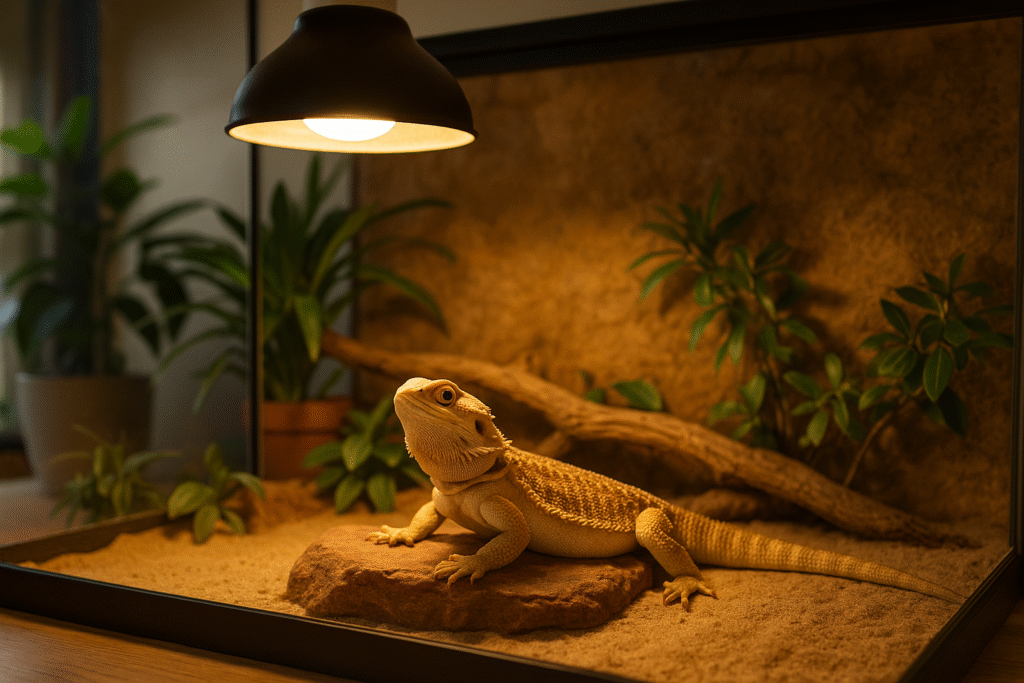
Reptiles rely on external heat sources to regulate their body temperature. That’s why maintaining a proper thermal gradient—warm on one side and cooler on the other—is vital. Use heat lamps, ceramic heaters, or under-tank heating pads to achieve this balance. UVB lighting is equally important for species like turtles, lizards, and iguanas. It helps them synthesize vitamin D3, which aids in calcium absorption and bone health. Proper temperature and lighting are vital to your reptile’s health. Without the right setup, your pet could struggle to regulate its body temperature or absorb enough UVB. For a detailed look at choosing the right heat source, check out our Best Heating Lamps for Lizards guide.
Substrate and Decor
The right substrate creates a natural and comfortable base for your reptile’s enclosure. Options vary depending on the species: sand for desert reptiles, coconut fiber for tropical species, or reptile carpet for ease of cleaning. Add rocks, branches, and hides to make your reptile feel secure. Providing both shaded and open areas allows them to regulate temperature and stress levels naturally.
👉 *Explore these ZeeDix 2 Pack Coconut Fiber Substrate, 100% Organic Coconut Husk Coco Coir Brick Terrarium Bedding for Reptiles, Tortoise, Bearded Dragon, Leopard Gecko, Snake and PINVNBY Reptile Resin Castle Decoration,Bearded Dragon Habitat Accessories Crested Gecko Hideouts Cave Reptiles Vines Flexible Jungle Climbing Vines Decor for Chameleon Snake Gecko Lizard(4 Pcs) to design the perfect habitat.*
Humidity and Hydration
Maintaining proper humidity is crucial for your reptile’s respiratory health and shedding process. Use a hygrometer to monitor humidity levels and mist the enclosure regularly if needed. Some species also benefit from shallow water bowls or dripping systems for drinking and soaking.
👉 *Check out this Reptile Humidifiers Smart Misting System, Reptile Mister Automatic with Timer, Terrariums Humidifier with 360°Adjustable Misting Nozzles to easily maintain humidity levels.*
Cleanliness and Maintenance
A clean habitat is essential to prevent parasites and bacteria. Spot-clean your reptile’s enclosure daily to remove waste and uneaten food, and perform a deep clean every few weeks. Always use reptile-safe disinfectants when cleaning accessories and glass surfaces. Monitoring Your Reptile’s Health, Healthy reptiles are alert, active, and have clear eyes and smooth skin. Changes in appetite, shedding issues, or lethargy may signal underlying health problems. Regular vet visits—especially with an exotic pet specialist—help ensure your reptile’s health stays in top condition.
Final Thoughts
Setting up a reptile habitat is more than just creating a tank—it’s about building a balanced ecosystem where your pet can thrive. With the right heat, light, substrate, and humidity, your reptile will feel right at home. By taking time to learn your species’ specific needs, you’ll develop a routine that keeps them happy, healthy, and active for years to come. For professional reptile care tips and species-specific advice, visit PetMD’s Reptile & Amphibian Center
Comments are closed, but trackbacks and pingbacks are open.