Disclosure: As an Amazon Associate, I earn from qualifying purchases.
The Best Cat Food for Indoor vs Outdoor Cats
Cats may share the same species, but their nutritional needs can differ dramatically depending on their environment. An indoor cat lounging around the home expends far less energy than an outdoor cat exploring, climbing, and hunting. Feeding your cat the right diet tailored to their activity level not only supports their energy balance but also impacts their digestion, coat, and overall longevity.In this scientifically informed guide, we’ll break down the core differences between indoor and outdoor cat nutrition, and show how to choose the best diet for your feline companion’s unique lifestyle.
Nutrition is just one part of keeping your cat healthy and happy. For a full list of must-haves that support every aspect of feline care, visit our Cat Essentials page for feeding tools, toys, and more.
1. Understand the Nutritional Differences
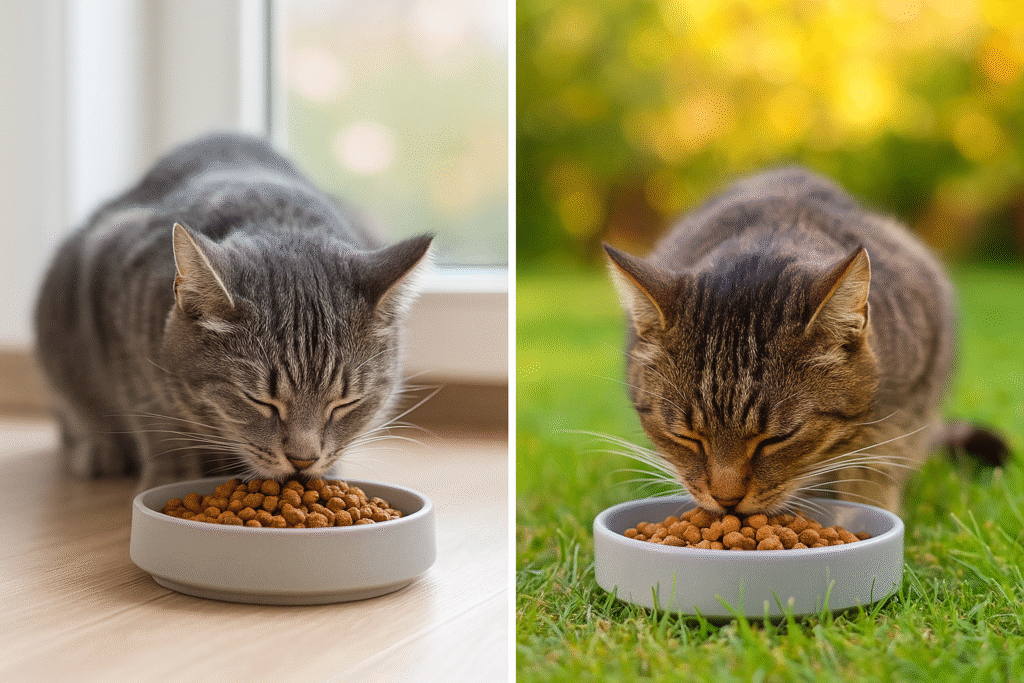
The main factor that differentiates indoor and outdoor cats is their caloric and protein requirements. Outdoor cats need higher protein and fat content to support muscle function, regulate body temperature, and replenish energy stores after activity. Indoor cats, on the other hand, need controlled calorie intake to avoid obesity and hairball buildup.
👉 *Try this IAMS Proactive Health Indoor Weight Control & Hairball Care Adult Dry Cat Food, Chicken & Turkey Recipe, 7 lb. Bag designed for balanced energy and digestive health for indoor cats and Blue Buffalo Wilderness Nature’s Evolutionary Diet High-Protein, Grain-Free Natural Dry Food for Adult Cats, Chicken, 2-lb. Bag for outdoor cats.
2. Key Ingredients to Look For
Cats are obligate carnivores, meaning their metabolism is designed to process nutrients from animal protein. A biologically appropriate diet should list a named meat—such as chicken, turkey, or salmon—as the first ingredient. Essential nutrients include taurine (for heart and eye health), omega fatty acids (for skin and coat), and L-carnitine (for fat metabolism). Avoid foods that list ‘meat by-products’ or ‘corn gluten’ as primary ingredients—these can contribute to poor digestion and nutrient imbalance.
👉 *Check out this Solid Gold High Protein Dry Cat Food – Grain Free & Gluten Free Chicken Cat Dry Food w/Probiotics for Gut Health & Digestion – High Fiber & Omega 3 – Low Carb Superfood Kibble for Cats All Ages – 6LB made with real meat and amino acids.*
3. Indoor Cat Diet Essentials
Indoor cats require fewer calories but greater fiber for digestion and hairball prevention. Their ideal nutrient ratio typically includes around 30% protein, 9% fat, and added prebiotic fiber. Look for formulas that include psyllium husk or beet pulp to support intestinal motility. Additionally, indoor cats benefit from antioxidants such as vitamin C and E to strengthen immunity against environmental toxins.
👉 *Consider this Solid Gold Indoor Dry Cat Food – Grain Free & Gluten Free – Salmon Cat Food Dry Kibble for Indoor Cats w/Probiotics & Fiber for Gut Health – Sensitive Stomach & Hairball Support for Adult Cats – 3LB enriched with fiber and omega oils.*
4. Outdoor Cat Diet Essentials
Outdoor cats have a higher metabolic rate and need increased protein and fat for sustained energy. Their ideal macronutrient ratio includes 35–45% protein and up to 20% fat, with essential fatty acids like DHA and EPA from fish oils for joint flexibility. Vitamin D and zinc are also crucial for outdoor cats to maintain bone strength and skin barrier protection.
👉 *Try this Feline Natural High Protein Dry Cat Food, Freeze-Dried Diet with 98% Meat, Organs & Seafood, No Peas, Grains, or Artificial Additives, Made in New Zealand, Chicken & Lamb, 11oz with antioxidants and fish oils for endurance and recovery.*
5. Wet vs. Dry Food: A Scientific Perspective
Hydration is one of the most critical factors in feline health. Cats naturally have a low thirst drive, so wet food provides essential moisture to reduce the risk of urinary tract disease. Dry food, however, is convenient and helps maintain dental health. A mixed feeding regimen—alternating wet and dry—can balance hydration with dental maintenance.
6. Balancing Protein and Caloric Density
High-quality protein supports lean muscle mass and overall vitality. Outdoor cats need more calorie-dense food to maintain body heat and stamina, while indoor cats benefit from leaner protein sources such as chicken or white fish.Cats should consume approximately 25–35 calories per pound of body weight daily, depending on activity level.
7. How to Transition Safely Between Foods
Cats can be sensitive to sudden dietary changes. Transition gradually over 7–10 days by blending increasing proportions of the new food into the old. This allows the gut microbiome to adapt, reducing digestive upset.
Final Thoughts
Indoor and outdoor cats thrive when their diets reflect their energy demands, environment, and natural behavior. Indoor cats benefit from controlled calories, hairball prevention, and high fiber; outdoor cats need higher protein, fat, and immune-support nutrients.By understanding these nutritional principles and selecting the right products, you’ll enhance your cat’s vitality and lifespan. Choosing the best food for your cat depends on their lifestyle, energy levels, and environment. For veterinarian-approved feeding advice and detailed nutrition information, check out PetMD’s Cat Nutrition Guide.
1 Comment
Comments are closed, but trackbacks and pingbacks are open.