Disclosure: As an Amazon Associate, I earn from qualifying purchases.
Bunny Grooming and Nail Care Basics
Rabbits are naturally clean, gentle creatures who spend a lot of their day grooming themselves. But even though they’re experts at self-care, they still need a little help from us to stay happy, healthy, and tangle-free while keeping your rabbit’s comfort in mind. Regular grooming and nail care not only keep your fluffy bunny looking adorable but also help prevent health issues and strengthen the bond you share.
Why Grooming Matters
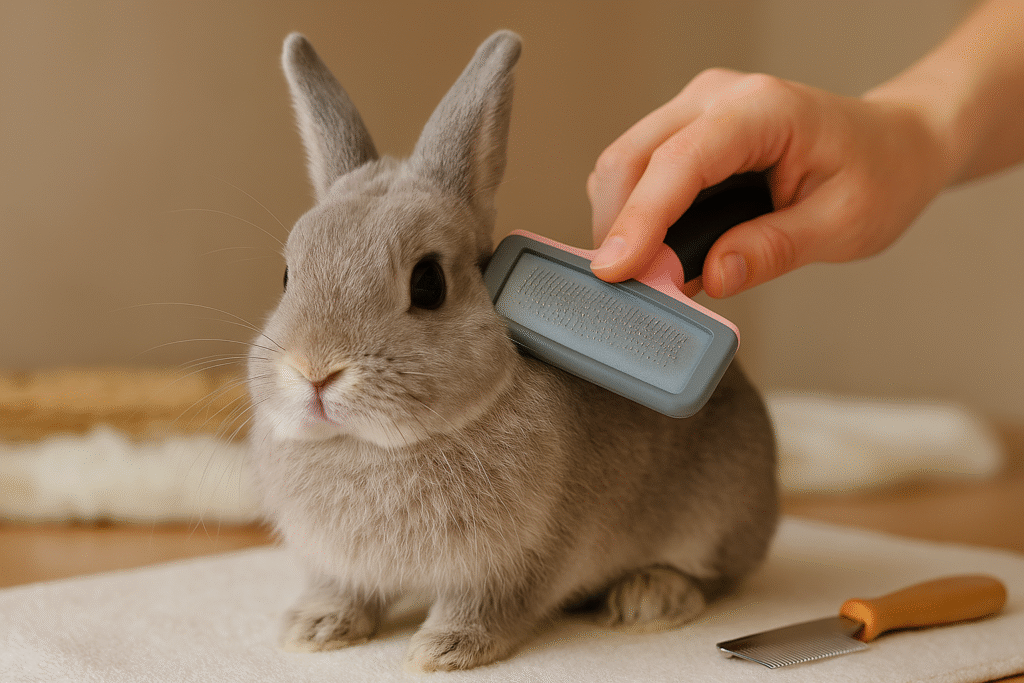
Brushing your rabbit regularly helps remove loose fur and prevent mats, which are clumps of tangled hair that can pull painfully on the skin. During shedding seasons, rabbits can swallow a lot of hair while cleaning themselves — and unlike cats, they can’t cough it back up. This can lead to wool block, a dangerous digestive issue. A quick brushing a few times a week can make a big difference and reduce the risk.
How Often to Brush Your Rabbit
The amount of grooming your bunny needs depends on their breed and coat type. Short-haired rabbits, like Rex or Mini Lops, usually only need brushing once a week. Long-haired breeds, such as Angoras or Lionheads, need daily brushing to prevent tangles and mats. During shedding periods, increase brushing to every other day to help them stay comfortable and clean.
Regular brushing not only keeps your rabbit’s coat soft and shiny but also helps reduce shedding and prevent hairballs. For more tips on maintaining your rabbit’s health and comfort, check out our Upcoming Rabbit Care Guide.
Tools You’ll Need
Having the right grooming tools makes the process smoother and more enjoyable for both you and your rabbit. Here are a few essentials:
• Soft-bristle or slicker brush
– Gentle on fur and skin.
• Fine-tooth comb
– Great for catching small tanglRabbit Grooming and Nail Care Basicses.
• Pet grooming wipes
– Perfect for quick clean-ups (no baths needed!).
• Blunt-tipped scissors
– To carefully trim away stubborn mats.
• Nail clippers made for small animals
– Essential for keeping nails from overgrowing.
Nail Trimming 101
Your rabbit’s nails grow continuously, and if they get too long, they can curl into the paw pad or snag on carpet and bedding. Most rabbits need their nails trimmed every 4–6 weeks. If you’re new to trimming, start slow and take breaks — patience is key!
Here’s a simple guide:
1. Gather your tools — pet nail clippers, styptic powder (in case of bleeding), and a towel.
2. Wrap your rabbit gently in the towel for comfort and control.
3. Locate the pink part of the nail, called the quick, and only trim the tip beyond it.
4. Make small snips, one at a time. If your rabbit has dark nails, shine a flashlight from underneath to see the quick.
5. Praise your bunny and offer a small treat when you’re done!
Handling Nervous Rabbits
Not every bunny loves being brushed or having their nails done — and that’s okay! If your rabbit gets nervous, keep sessions short and positive. Talk softly, pet them gently, and reward calm behavior with treats or extra cuddle time. You can even break grooming into smaller sessions throughout the week to make it less stressful.
When to Seek Professional Help
If your rabbit’s fur becomes badly matted, or if you’re uncomfortable trimming nails yourself, don’t hesitate to ask for help. A rabbit-savvy vet or professional groomer can safely handle mats, nail trims, and even show you the best techniques to use at home. It’s always better to get guidance than risk hurting your bunny by accident.
Final Thoughts
Grooming and nail care may seem like small tasks, but they make a big impact on your rabbit’s comfort and health. By brushing regularly and keeping nails trimmed, you’re not only helping your bunny look their best — you’re building trust and connection. Over time, your rabbit will come to see grooming time as bonding time. A little patience, a gentle touch, and lots of love go a long way toward keeping your fluffy friend healthy and happy.
For expert rabbit care advice and professional grooming guidance, visit PetMD’s Rabbit Care Guide
Comments are closed, but trackbacks and pingbacks are open.